
Multiculturalist Ideology (Part One): A Rationale For Race War Politics
An Examination Of The Logic of Multiculturalism
An Examination Of The Logic of Multiculturalism

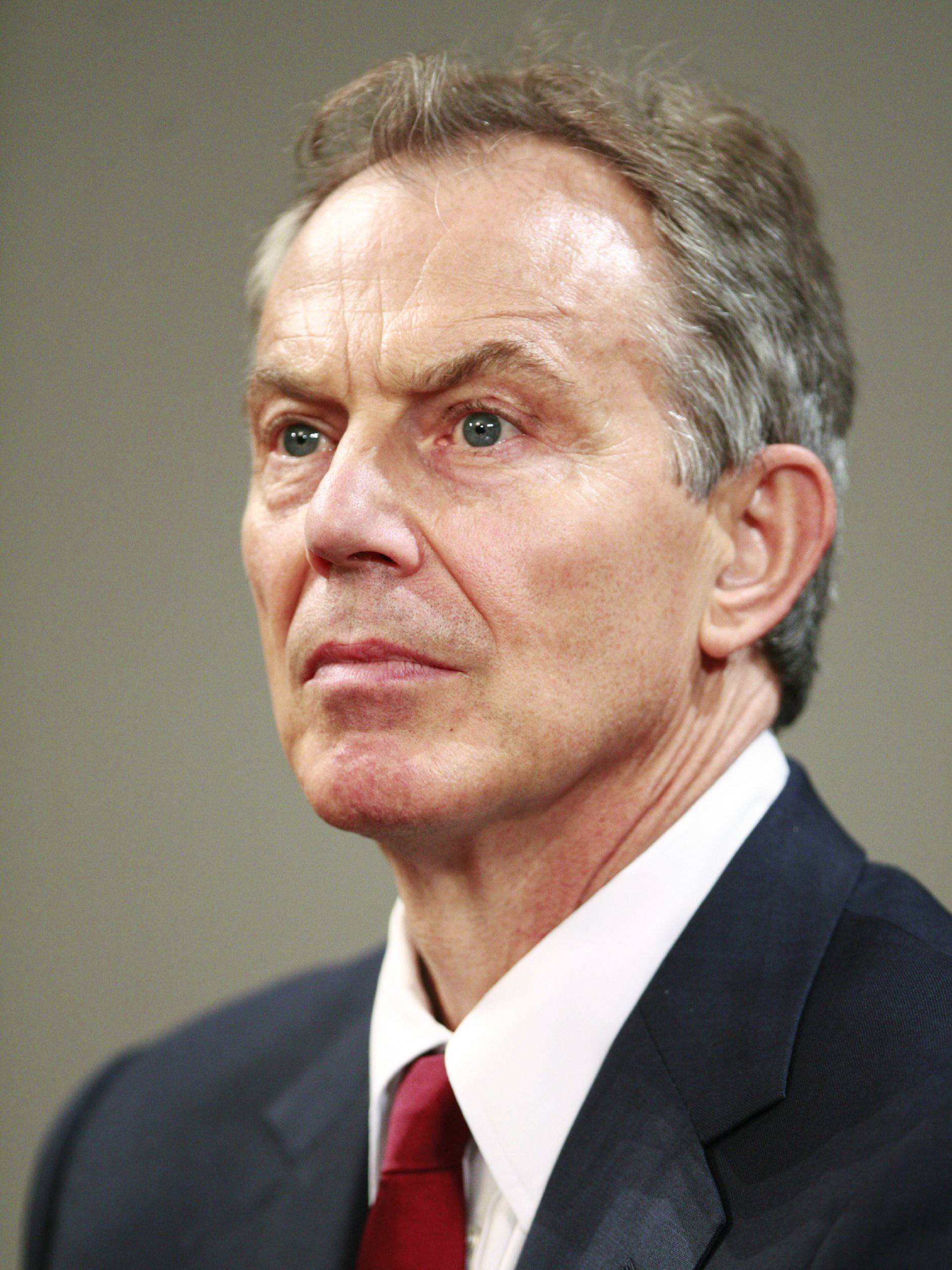
In an essay, entitled ‘The Labour Party Is Playing With Fire Over Its Future and the Future of the Country’, Tony Blair attracted some media attention as he dived into the failure of the Labour government and its impending leadership contest once the looming by-election is over.
The essay has been assigned an importance it does not deserve. It might have some impact on Labour MPs and party activists, but it dodges the problems facing the country by presenting a case devoid of authenticity. Instead, Blair wallows in his globalist comfort zone.
According to Blair: ‘The government’s principal problem … is … we don’t have a worked-out, coherent plan for the country in a fast-changing world and are in the wrong political position from which we can devise one and win a second term.’ This remark betrayed that it was the interests of the Labour government and its re-electability that was of concern to Blair – not the national interest. Also, his criticism of the lack of a plan ‘in a fast-changing world’ related the problem to that world, rather than there being any inherent flaw with Labour. In fact, socialist states are generally failed states; with Marxist states the ruin is consistently all encompassing and bloody.
Blair was correct to stress the importance of policy rather than personalities, and correct to highlight the importance of economic growth. Presently, the Labour government is taking it for granted that growth will occur of its own accord, and that all they have to do is dream up new schemes for putting up taxes to pay for their wasteful expenditure.
Blair was correct in saying: ‘Just as Brexit was never the answer to Britain’s challenges back in 2016, reversing it isn’t the answer to the country’s far worse situation in 2026. Our relationship with Europe should be part of a comprehensive strategy for Britain’s future, and that doesn’t begin with Europe but here at home.’ What Brexit did do was to restore sovereignty and thus empowered the UK government to tackle the country’s problems. The failure of the government to seize that opportunity is a failure of the British ruling class – not a failure of Brexit. Rejoining the EU is a distraction, and exports to the EU, accounting for around 14 per cent of GDP, are a sideshow. It is the home market, accounting for 70 per cent of GDP, that matters.
Blair is correct to highlight: ‘America’s superpower status is now shared by China, in time to be joined by India. A sort of G2/3. These countries will be far ahead of whichever nation is in fourth place. By this calculation, everyone else including Britain is a middle power.’ But wrong to assume that this change is inevitable or that Britain’s GDP per capita must continue to remain, at best, almost static.
Blair asked and then answered: ‘What is power derived from? From the strength of a country’s economy and the strength of its military capacity.’ But this is a globalist viewpoint in that Blair is judging the UK by its relations with other, often competitive if not hostile, powers. Blair proceeded to set out what Europe needs to do, the role of the USA, and that ‘The case for the Western alliance is as strong as ever.’
Blair then asked and then answered: ‘So where does this leave Britain? Caught between the isolationist tendency of parts of the right and misguided progressivism of parts of the left which combined are in danger of leaving Britain marooned on an island of irrelevance.’ Expecting the UK government to govern competently in the national interest is not an ‘isolationist tendency’. The public expect the UK to be properly governed and this does not leave the UK ‘marooned’ anywhere.
As Blair warmed to his globalist theme, he opined: ‘We have forgotten an essential lesson not just of diplomacy but of power politics: if you want to play you have to be sat at the table. And bring something to the table.’ Thus he averred that the UK should be a part of the EU and that we needed to buy our way onto the international stage with generous foreign aid (which he readily accepted was unpopular with the voting and taxpaying public, although ‘bishops’ might favour it): ‘but it is important for Britain’s strength abroad that we develop deep ties with a developing world which is developing fast’.
It was Blair’s view:
‘What’s done is done. None of these things can simply be reversed. But to repair our standing, all require leadership and commitment. For the American relationship, that means building defence capability and being prepared politically to argue for the alliance … For soft power, it is impossible for fiscal reasons to wind the clock back. But there are substantial things Britain can offer our developing-world partners … Not for full articulation here, but we need a functioning relationship with the other superpower: China … The Western alliance should be strong enough to deal with whatever comes from China; but stay engaged with it and where viable, cooperate with it.’
In passing, Blair rejected Canada’s prime minister Mark Carney’s assertion that the world order as we have understood it post WWII is over, and that countries needed to be more independent and resilient. For Blair: ‘The cumulative risk for Britain is that we become frighteningly insular’ and that ‘The hardest part is our relationship with Europe.’ However: ‘Any structured relationship [with the EU] will require a negotiation. And that negotiation will have to be from strength and not weakness.’
Blair recognised ‘a fundamental problem. The people don’t want “politics as usual” [and the populists’] chief characteristic is they appear to be unbound, not constrained by conventional thinking.’ He cited the rise of populists across the Western hemisphere as evidence of this. The populists got things done.
Blair criticised the Labour governments lack of purpose and drive and accepted that this ‘requires a fundamental reset’. He continued:
‘Whoever is elected next time will be seen as offering something radical. At present, there are the Greens offering radical leftism. There is Reform offering radical rightism. The Tories are offering Reform Lite. (The Lib Dems are being Lib Dems, i.e. finger in the wind). In these circumstances, if Labour continues as “Just Labour”, it risks getting sliced to the left and right of itself. Labour’s only electorally viable strategy is to become the Radical Centre.’
While Blair still believed that elections can be won from the centre, he also believed ‘The centre should never be the place of managing the status quo. Or of splitting the difference between left and right. Or just being ‘moderate.’
Blair then set out 10-point agenda, which, despite what he had just argued, showed that he still did not get the plot. For example, he wrote:
‘”Reindustrialisating” the north of the country can be encouraged by government giving incentives and help but most of all it will come through first-class infrastructure, education, freedom from bureaucracy, and government working in partnership with the private sector and with the forward-facing part of the trade-union movement. And with a broad definition of “industry” if we want to create jobs because much of future manufacturing will likely be done by robots, though there will be also major opportunities in areas requiring a high degree of traditional skills.’
This is waffle. For example: Why was reindustrialisation only confined to the north? What about Chinese unfair trade practices, their thieving, and their brazen attempt to sabotage British steel production? What about a buy British policy in the state sector? What about the trade deficit with the EU? Why is the UK grovelling to India for a trade deal and offering to them to take even more immigrants?
For example, Blair’s parting shot being point 10 was: ‘Our aim, for the long term, should be a Reimagined State in which taxes and spending can be lower, productivity higher and government seen as enabling not directing, with political consensus behind such a radical restructuring of the state.’ This is just visionary wind. He might as well as offered sunny summers.
None of his 10 points dealt with the existential threat posed by mass immigration – not even on the very day that the latest birth statistics revealed the extent of the collapse in the English birth rate and the vast scale of the birth rate of the immigrant communities. Not even on the same day that a report revealed the extent to which young people have been pushed out of the labour market by low-skilled, low-wage immigrants. The number of young people not in education, employment or training (NEETs) is expected to soon reach 1.25 million. Mass immigration and aggressive multiculturalisation are problems that seriously worsened under Blair’s premiership.
The big mistake with Brexit is that the UK faced a choice between adopting an alternative version of globalisation, or of re-establishing the UK as an independent country. The Brexiteers were mainly internationalist liberals (including UKIP) and they instinctively lurched towards globalisation at the same time as the Remainers were out to torpedo the Brexit vote. We should have opted for being a resilient, independent country. Instead of Turbo Brexit, we got a ruinously expensive, drawn out pantomime.
Blair is simply arguing for more globalisation.