
Multiculturalist Ideology (Part One): A Rationale For Race War Politics
An Examination Of The Logic of Multiculturalism
An Examination Of The Logic of Multiculturalism

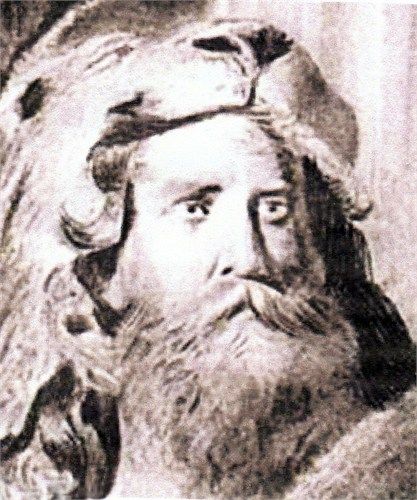
I watched a programme on the BBC last night entitled ‘Civilisations: Rise and Fall’. The first episode being the fall of the Western Roman Empire (The Eastern Roman Empire, known as the Byzantine Empire, survived another thousand years). I did wonder if the viewer might see an interesting programme about a turning point in history – or Marxist propaganda. My scepticism was quickly confirmed with an opening commentary describing Alaric (the then leader of the Visigoths) as being a barbarian leader ‘thirsting for revenge’. From then on, it was downhill all the way. Instead of history we were presented with anti-history.
I have previously blogged about the fall of the Roman Empire (see here), primarily relying upon Edward Gibbon (with some input from Arther Ferrill’s The Fall of the Roman Empire: The Military Explanation) from whom I take an important quote. I am satisfied that Gibbon is more reliable and knowledgable than the BBC and its assorted experts – including Baroness Amos, of all people.
This programme was aired on the very day that the BBC was telling parliament that they were not biased.
The programme proceeded to describe Alaric as ‘a refugee treated with cruelty and prejudice, driven to violence’. What utter drivel. My quote from Gibbon sets out the truth. The programme concentrated on Stilicho being half-Vandal and half-Roman, describing him as being ‘caught between two worlds, and trusted by no one’. This is highly subjective drivel.
The programme referred to the crossing of 100,000 Goths into the Roman Empire across the Danube, but neglected to mention that the Eastern Roman Empire’s then emperor, Valens, had agreed to the Visigoths crossing into the Empire, but not the Ostrogoths who crossed anyway. It referred to a ‘fightback’ by the Goths against Roman ill-treatment, but omitted to mention the Battle of Adrianople (378 AD).
Valens had not wanted to be emperor and had only eventually agreed to take on the role as a favour to his brother, Valentinan, who was emperor of the West (Valentinian also appointed his young son, Gratian, to be co-emperor). Valens was regarded as a weak man, but was loyal to his brother. The capable Valentinian was very much a soldier-emperor and had been busy defending the borders from barbarian incursions. Unfortunately, one group of barbarian ambassadors had been so insolent that Valentinian had flown into such a rage that he suffered a stroke that killed him.
Instead of dealing with any of this, the BBC preferred to comment about how the Romans viewed the Goths with ‘deep seated prejudices’; that ‘racial stereotypes [are] so enduring’; and that: ‘The 20thearly 21st century has seen more examples of that then one can easily count. Reducing people to stereotypes means that you don’t have to regard them as full human beings, usually with tragic results.’ Also: ‘The problem is not migration. The problem is not displaced peoples … The problem is how governments respond to displaced people. You can choose to take them into your society, or make them into an enemy.’ This is all cultural Marxist ideology and has nothing to do with the fall of the Western Roman Empire, which, incidently, had a long history of treating barbarians badly.
Of Valens’s decision to march the Eastern army to Constantinople to confront the Visigoths, Gibbon wrote: ‘The imprudence of Valens and his ministers had introduced into the heart of the empire a nation of enemies … on this occasion alone Valens was brave; and his unseasonable bravery was fatal to himself and to his subjects.’ Valens had asked the Western Emperor, Gratian, his nephew, to bring the Western legions to assist in the looming confrontation, but then attacked the Goths at Adrianople when a dawdling Gratian was nearby but had yet to arrive. The outcome of the battle was that the Roman skirmishers were pushed back into the legions, the cavalry ran, the reserves ran, and the legions were surrounded and cut to pieces. Two-thirds of the Roman army perished, including Valens himself.
This battle was a turning point in history, yet the BBC never mentioned it.
Nor was there any mention of the emperor Theodosius the Great who vainly tried to defeat the Goths and push them out of the Empire. Greece and the Balkans were laid waste by the Goths. Eventually a deal was done and the Goths fought in the Roman army – albeit independently. It was Theodosius who had put the Goths on the front line in battle, about which the programme complained had led to the deaths of 10,000 of them.
Nor did the programme even refer to the two civil wars with the Western Empire that Theodosius fought, nor of the consequences on military strength when Romans were killing Romans.
Theodosius’s sly moves to weaken the Goths ended upon his death and the elevation to the throne of his two sons Arcadius and Honorius (the Eastern and Western Emperors respectively) – and these two were responsible for the inept rule that doomed the Western Empire.
Instead, regarding Alaric’s subsequent rebellion, we have Baroness Amos commenting: ‘What we have is a two tier society. Promises have been broken to them, time and time again. No respect is given to them. And, at the end of the day, they feel that they have to rise up and fight for their rights.’
The commentary was that Alaric wanted to be a part of the Roman Empire ‘if he can overcome prejudice against the Goths’. Baroness Amos said: ‘The Romans stereotype Alaric and his people, and, in a way, force him to become the thing they are fearful of.’
The programme correctly gave the General Stilicho prominent coverage. He was a better general than Alaric and had beaten him in battle and got the better of him repeatedly. The programme correctly described the arrest and execution of Stilicho as a disaster, but skipped over the details of what had led to this. My blog post was more sympathetic and critical of Stilicho than the programme, which preferred to focus on Stilicho being half-Vandal and the ‘wealth inequality’ of the Empire. The Roman ‘super rich’ were compared to the billionaire superclass today.
The programme declared that Stilicho could have done a deal with Alaric, but neglected to highlight that it was Stilicho’s attempted deal-doing that led to his downfall. Prior to this, he was seen as a Roman hero and was very popular. I n particular, he had in 406 AD defeated an army led by Radagaisus, who had invaded Italy from the north with a claimed 200,000 to 400,000 followers. The barbarians were cut off from supplies and then massacred, with Radagaisus being taken prisoner before being executed in Rome.
The programme remarked that Honorius retreated to the safety of Ravenna when Rome was besieged. In fact, Ravenna (on the northeastern coast of Italy) was the Western Empire’s capital and Honorius stayed there, in his palace, while his empire fell apart.
There was no mention of the rebel legions from Britain who had crossed over into Gaul to confront the barbarians invading from across the Rhine. Nor any mention that, at one point, a rebel force had crossed into northern Italy with a view to supporting Honorius, who was too stupid to engage with them and accept their help. The programme wrongly alleged that other Roman provinces were invaded as a consequence of the sack of Rome (410 AD). In fact, the barbarians were already invading other Roman provinces.
The closing comments dismissed the Roman Empire as a ‘two tier society that favoured the rich, while failing to solve the challenges of mass migration’, and that ‘This is a refugee crisis gone wrong. It is something we are now very familiar with in our modern world.’ Pathetic. Needless to say, the programme did not go into the barbarisation of the Roman army or its consequences.
The BBC programme was a disappointment. By fixating on peddling Marxist propaganda it presented anti-history rather than historical truths. It could have delved deeper into the personalities of those involved in a series of bad decisions. It could have questioned the inevitability of Rome’s fall and assessed the chances of a more competent leadership dealing with the crises. It could have asked why the West fell whereas the Byzantine Empire survived.
Instead, the BBC showed itself to be as decadent and incompetent as those on whom it pronounced. It purported to show the lessons we could learn today. By averring that the barbarian invaders were justified in their violence towards Romans and were entitled to invade the Empire, the BBC came close to justifying the invasion of England and of violence towards the English.
Defund.